Introduction
Honduras is a Central American country which hosts an unique array of ecosystems due to its placement between tropical and subtropical climates and shifting terrain. Around 80% of the country is interior highlands which slope into the coastal lowlands and mangrove forests and roughly 55% in total of Honduras is covered by varying forest types. Due to this, Honduras is home to many endemic species which belong to specialised biomes and environmental niches. The conservation of this biodiversity is crucial for ecological balance, however, the pressures of palm plantations, pollution and poor regulation continue to threaten the Republic’s plant and wildlife.
Case Studies
Honduran Emerald
The Honduran Emerald is a hummingbird which is native to the dry valleys of Honduras, notably the Agalta and Aguan . The Honduran Emerald’s original range has been reduced and degraded due to land use change – primarily through modern agriculture plantations and cattle grazing. Despite the Emerald being more widely distributed that previously believed, the hummingbird is still considered vulnerable due to the fragmentary nature of its distribution and the continuing decline of population.
Improved access to the hummingbird’s habitat via road construction has led to environmental pressures like pineapple and palm plantations. In the Aguan Valley, pineapple plantations cleared an average of 379 ha per year between 1994 & 2000 whereas infrastructure projects were carried out in the Agalta valley in 2009.
There has been a considerable conservation effort to aid the Honduran Emerald, in 2011 the Honduran Emerald Species and Habitat Management Area was expanded to 1,992 ha which encompasses the dry forests habitat suitable for the hummingbird. Although, if the Honduran government wishes to safeguard the species through the 21st century, there needs to be a promotion of dryland restoration to bolster species’ resilience.
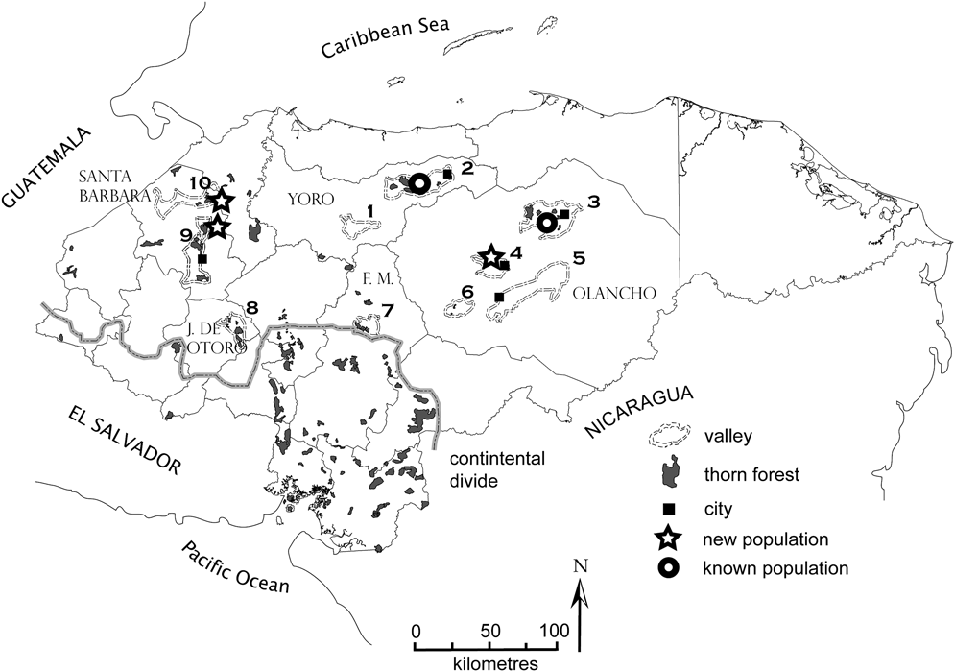
Figure showing the fragmented habitat distribution of the Honduran Emerald.
Ctenosaura Bakeri (Utila spiny-tailed iguana)
Ctenosuara Bakeri, commonly known as the Utila spiny-tailed iguana or ‘Swampers’, is a reptile native to the island of Utila off the coast of Honduras. It is one of two reptile species which are exclusive to living within Mangrove swamps. Due to mangrove degradation, deforestation and fragmentation the reptile is considered critically endangered with their numbers believed to be below 5,000. As environmental pressures mount on the habitat on the island, an action recovery plan is needed to prevent the extinction of the spiny tailed reptile.
The reptile uses the hollows within the mangrove forests as hideaways and they use sandy beach habitat with coastal vegetation for breeding. As mangrove forests are being polluted through illegal dumping and beach vegetation is being cleared for coastal commercialisation, the health of the lizards has been reported to be dropping, along with their population. Illegal hunting, by human and the invasive racoon, of their meat and eggs has also caused species decline.
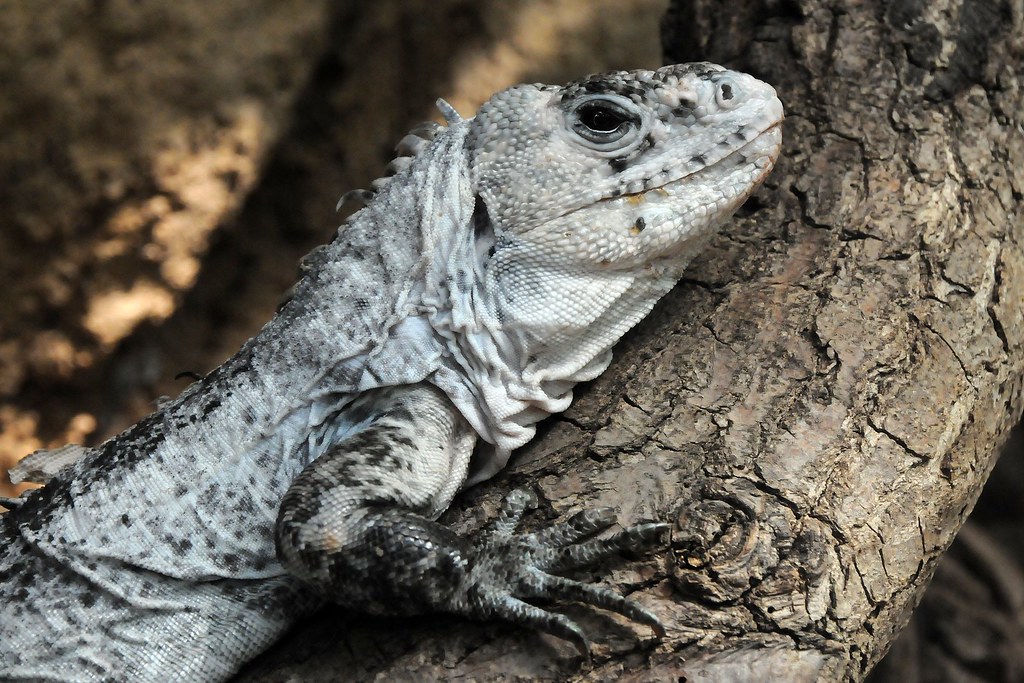
A Utila spiny-tailed iguana perching within a mangrove forest
Although the iguana is under significant threat, there has been a dedicated conservation effort to combat their decline. The Conservation Project of the Utila Iguana (CPUI) was founded in 2004 and the International Iguana Foundation (IFF) both push for the conservation of the swampers. The CPUI focuses not only on the breeding conservation of the iguana but also the sustainable development of the locals. The CPUI & IFF both facilitate ‘head start’ programs which releases the iguana’s into mangrove forests once no longer vulnerable. Despite this, the iguana station still lacks funding, with most of the labour being carried out by volunteers. Moreover the species is protected by an anti-poaching law, however, enforcement is either weak or non-existent, even within the one protected zone on the island – the Turtle Harbour Wildlife Refuge area.
It’s clear that for the future survival of the Ctenosuara Bakeri that commercial development needs to be balanced with the ecological requirements of the island’s wildlife, education needs to be provided for dumping and hunting and further resources need to be made available to both enforcement agencies and the conservation projects in the area.
Wildlife Conservation Positives In Honduras
Protected Areas
National Parks and Reserves
Honduras has established numerous protected areas such as the Río Plátano Biosphere Reserve, a UNESCO World Heritage site, which covers a significant portion of La Mosquitia rainforest. These areas are critical for preserving diverse ecosystems and species as La Mosquita holds the largest areas of wilderness in Central America.
Community-Managed Areas
Initiatives like community forest areas (within the Rio Plátano Biosphere reserve) and community water committees (Juntas de agua) have empowered local populations to take an active role in conservation, leading to more sustainable management of natural resources . Tens of thousands of farmers and landowners actively protect and manage forests on their lands which can play a big role in safeguarding environmental stability while providing value to the community.
Within these community forestry areas, illegal logging and deforestation rates are shown to have been reduced in comparison from unprotected areas which is linked to these communities placing less pressure on their natural environment than outside actors.
Growing Conservation Movement
In 2017, the Jovenes para la Conservacion (JPC) was founded to spread natural resource management skills to an upcoming generation and inspire them to protect their own natural environment. This youth conservation program has not only had a positive impact on a new generation of Hondurans but has spawned a sprawling cascade of positive impacts in Honduras’ budding conservation sector. Partnerships with the program have created more opportunities for graduates, national park training programs and a vast alumni network – many of who now spearhead conservation efforts in their own local communities.
The program can not only inspire generations of passionate conservationists in the country but also link disparate communities’ conservation efforts through the alumni network, which could lead to a hivemind of ideas and programs in the near future.
Ecotourism
Although behind its neighbour Costa Rica, there have been inroads into the sustainable tourism projects in Honduras. In La Mosquita , a collaboration between La Ruta Moskitia (a collaboration of indigenous communities) and RARE (an international Conservation non-profit) has developed a community-based tourism project which aims to address both biodiversity conservation and community poverty issues. The scheme trains locals to lead eco-tours which provides stable income for communities and provides even more incentive for communities to protect their local wildlife. One project even provides volunteers with the chance to protect nests of leatherback turtles, this directly aids the survival of a species and will spread awareness of the issue through social media.
In Pico Bonito National Park eco-lodges, tour operators and conservation professionals are working in tandem with local villages and NGOs to set up sustainable tourism infrastructure which aims to provide both economic and environmental stability to the region.
However, eco-tourism and its impact, despite having noble intentions, also have to be evaluated consistently to ensure that too much tourism doesn’t lead to the degradation of the natural environment and that eco-lodges and hotels are complying with environmental regulations. If these projects aren’t ran sustainably, they could very well harm the environment they’re supposed to be protecting.
Challenges to Wildlife Conservation
Climate change’s impact on ecosystems
Climate change is altering habitats, affecting species distribution and overall ecosystem health. Biome shift is causing the traditional boundaries of species to be stretched and the coastal systems in Honduras are in danger of rising sea temperatures, which are only exacerbated by pollution and overfishing.
Climate projections into the 21st century forecast increased temperature, drought and a decrease in precipitation. All of these factors, mixed with agricultural and livestock stressors, will put a major strain on the country’s water table which could lead to mass water insecurity, with only further pressure then placed on the natural environment. If not addressed, this can lead to widespread ecosystem collapse.
Increased Natural Disasters
Rising global temperatures are linked to increased natural disasters such as tropical storms and wildfires. The most wildfires recorded throughout Honduras in a year was 4,598 in 2020. Both of these systems cause stress to Honduras’ infrastructure and can lead to the further degradation of the natural environment.
Lack of Enforceable Rights / Protection for Community Forests and Protected Areas
Community forest enterprises in Honduras have been undermined and are impeded by their limited rights to forest resources. Establishing a community’s secure tenure is seen as a fundamental component of community forestry. However, after 40 years, only 83 out of 234 in 2014 had legally valid contracts which gave them management rights over specific areas. Without these legal rights, it means that it is more likely for outsiders to harm the the local flora and fauna for economic purposes through logging and cattle grazing.
As the Rio Plátano Biosphere Reserve covers a vast portion of land ( which many endangered species live within), enforcement of this protection can be inconsistent and ineffective in some areas. UNESCO in 2011 found illegal activities such as cattle grazing and illegal hunting which has returned the reserve to the list of world heritage sites that are in danger.
Conclusion
Honduras has made notable strides in wildlife conservation, particularly through the establishment of protected areas and community involvement within the conservation sector. The establishment of the Rio Plátano Biosphere reserve and the subsequent community forestry areas has a unique opportunity to tie sustainable community development along with the safeguarding of the natural environment.
The empowerment of Honduran youth through organisations such as the JPC has huge potential to energise the upcoming generations to take ownership over their country’s natural habitat and to spearhead a localised national conservation movement. Although it is too soon to evaluate the impact of the program, it has the potential for a cascading series of positive impacts both within their internal conservation sector and through direct positive action within their local environment.
Ecotourism is also another shining light which could illuminate Honduras’ environmental conservation practices going forward. Like no other industry, it makes way for mutual gain for both local communities and for the natural environment by entwining both of their futures in one endeavour. However, there is a worry that if demand rises too much, tourism companies could lose sight of this goal and the local environment could suffer from exhaustive tourism practices which could put a strain on local ecosystem services.
However, challenges such as deforestation, climate change and the lack of enforcement in protected areas continue to hinder nationwide progress. It is worrying that the largest nature reserve in the country, the Rio Platano Biosphere Reserve, can be seen as slipping into ‘dangerous’ territory nearly 30 years following its foundation due to poor enforcement. The rise of illegal logging, cattle ranching and plantation farming poses a serious threat to the foundational structure of the reserve and to the wildlife that resides there.
Human interference mixed with climate change and increased natural disasters put a strain on the natural systems of Honduras and reduce the resiliency of these systems to endure these stressors. As Honduras goes through more urban development, there has to be robust measures in place to safeguard the likes of the Utila spiny-tailed iguana against the rising pressures of commercialisation.
Strengthening enforcement, securing sustainable funding, and addressing socioeconomic drivers of environmental degradation are essential for the future of wildlife conservation in Honduras. With more legitimate rights bestowed upon community forests, there is real potential for huge socio-economic and environmental protections and progress to be made for both local communities and their wildlife. Moreover, if Honduras’ government are able to provide more funding for both the budding internal conservation sector and for eco-tourism practices, it could produce a potent two-pronged strategy which can safeguard biodiversity in the country through the 21st century.
 Conservare