The current state of wildlife conservation in Papua New Guinea
Papua New Guinea is celebrated for its rich biodiversity, harbouring numerous unique species due to its varied, dense ecosystems. The country is host to roughly 6-7% of the planet’s animal and plant species despite the land within its borders only accounting for 1% of the Earth’s landcover. Conservation efforts are crucial for maintaining this biodiversity and preserving unique biomes which support its native flora and fauna. However, these efforts face several challenges due to factors both based in and out of nature which threaten to undermine any semblance of progress in the Oceanic country.
Due to its unique topography and climate, Papua New Guinea is home is several unique species which will require conservation efforts if they are to survive the 21st century. A few examples are: Matschie’s tree-kangaroo ; Bulmer’s fruit bat and the blue-eyed cockatoo, which are all threatened already on the IUCN’s Red list.
Case studies
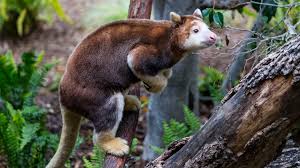
Matschie’s tree kangaroo
The Matschie’s tree kangaroo has been considered endangered since 1996 due to deforestation and land-use changes to the tree kagaroo’s native home of the Huon peninsula. It is considered that their numbers range around 2,500 and that number is still decreasing. Furthermore, reduction in habitat is being exacerbated by hunting and pollution.
The tree kangaroo is being supported though, notably by the Tree Kangaroo Conservation Program which supports local communities and develops strategies oriented by community health, livelihood, and education. They’ve worked with the local Yawan communities in an indigenous mapping project to blend local cultural knowledge with modern technology to imporve the boundaries between conservation areas and community space.
The YUS (Yopno, Uruwa and Som rivers) conservation area – aimed at improving and safeguarding the Matschie’s habitat grew to over 778,729 hectares in 2017.
Bulmer’s fruit bat
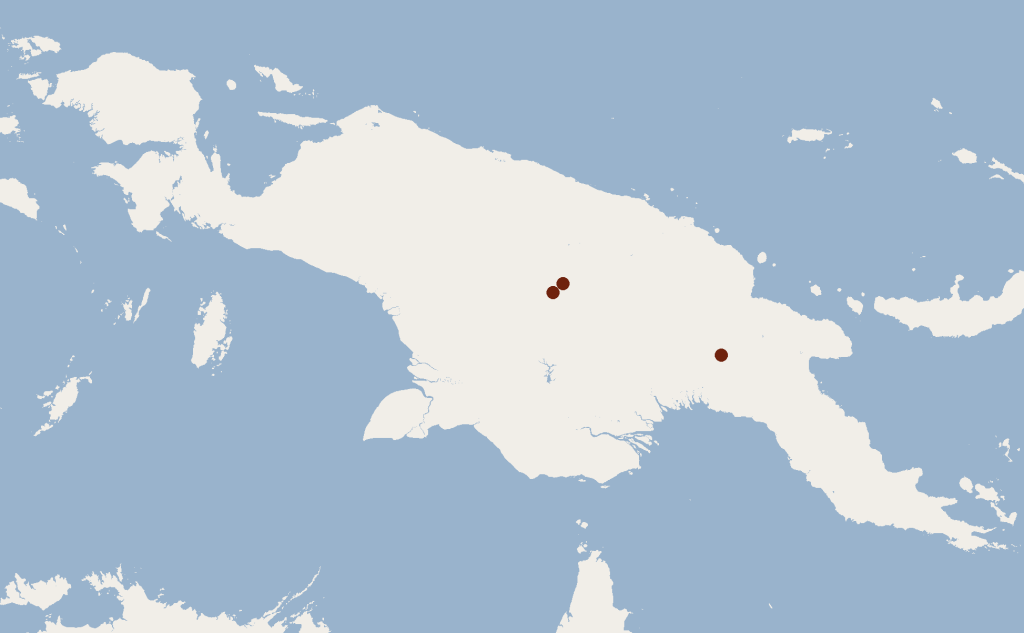
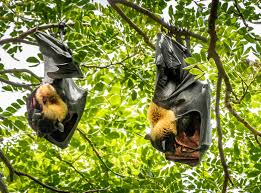
The Bulmer’s fruit bat was already considered to be extinct for 10,000 until 1974 until a native hunting trip introduced an anthropologist to the species. The bat has been considered endangered since 1984 and in 2016 the UINC states how “there is no current evidence for the survival of more than 250 mature individuals”, however, it is considered to actually be between 137-160. As the fruit bat only having wild extant populations in a handful of localities, conservation projects in these areas are vital to the species survival as a whole the species could become extinct with a few localised events. The NGO Bat Conservation international has listed the megabat as one of 35 on it’s priority list of conservation. Their numbers have been threatened due to hunting and habitat loss, however, a local mine opening is also theorised to have contributed to the species decline.
Despite being considered as a species ‘imminent for extinction’ there is currently no widespread or comprehensive conservation plan for one of the most endangered bats in the world. The Crater Mountain site where the bats reside is protected and the local community are active in local conservation, however, the Luplupwintem area is unprotected with the vast proportion of landowners not being aware of the significance behind the remaining Bulmer population.
Below : The distribution of Bulmer’s fruit bad next to a picture of two hanging off a tree branch.
Wildlife Conservation Positives in Papua New Guinea
Protected Areas and National Parks
- Establishment of Protected Areas: PNG has designated several areas as protected regions to conserve habitats and species, such as the Varirata National Park and the Tonda Wildlife Management Area.
- Biodiversity Conservation Projects: International and local NGOs, along with government initiatives, collaborate on initiatives to bolster and safeguard native wildlife. An example is the Lukautim Graun Program which established a conservation deed in the Bismarck mountain range which will protect over 4,0000 hectares through the collaboration of local clans. The mountain range is a biodiversity hotspot which is vulnerable to climate change factor, so a high biodiversity rate is key to its resilience.
Community-Based Conservation
- Local Community Involvement: Engaging local communities in conservation activities is essential, as they often have traditional knowledge about the land and its species, as seen with the locals at Crater Mountain and in Yawa.
- Sustainable Livelihood Programs: Programs that promote eco-tourism could be the future of PNG. Although it’s potential has not been fully realised, the culture of PNG’s many clans and the islands unique biomass could be safeguarded in tandem.
Legislation and Policy
- Environmental Laws: PNG has enacted various environmental laws and policies aimed at protecting wildlife and their habitats. A key example is the Environment Act of 2000, which aims to promote sustainable growth while protecting the environment and ecosystem services for generations to come.
- International Agreements: Papua New Guinea is a signatory to several international conventions, such as the Convention on Biological Diversity (CBD) and the Convention on International Trade in Endangered Species (CITES).
Challenges to Wildlife Conservation In Papua New Guinea
Deforestation and Habitat Destruction
- Logging and Mining: Extensive logging and mining activities lead to habitat loss and fragmentation, threatening numerous species. This can be seen in the case study of Bulmer’s Fruit Bat, where a nearby mine is considered to be a contributing factor to the decimation of the Luplupwintem colony.
- Agricultural Expansion: Conversion of forests into agricultural land, especially for palm oil plantations, results in significant habitat destruction. This land-use change reduces dense, structurally complex habitats into less productive grassland which can’t accommodate for the vast majority of wildlife.
Climate Change
- Rising Temperatures and Changing Rainfall Patterns: Climate change affects the habitats and distribution of species, causing biome shift and increased vulnerability of wildlife. This compounded by pollution and poaching greatly reduces species and ecosystem’s resilience. More intensive drought and flooding events have also been attributed to climate change through a more severe El Nino Southern Oscillation.
- Sea Level Rise: Coastal and marine ecosystems are particularly affected by sea level and temperate increases. This can lead to coral reef acidification and ecosystem destruction. More extreme high tides can also lead to the depletion of soil nutrients and habitat destruction.
Governance and Enforcement Issues
- Weak Enforcement of Laws: Poor enforcement of environmental laws and regulations leads to continued illegal activities which exacerbate existing environmental issues. This can be seen in the expansion of illegal logging and commercial plantations. Once destroyed, wildlife flees to surrounding habitats which only increases environmental pressures there too.
- Corruption: Corruption within governmental bodies can undermine conservation efforts. If conservation efforts aren’t transnational and supported through a variety if incentives, they can be exploited on the local and national levels and can lead to ‘protected area’s’ becoming exploited. In 2021, Transparency International reported that 96% of Papua New Guineans considered corruption to a a ‘big issue’.
The Future of Papua New Guinea
Wildlife conservation in Papua New Guinea is a multifaceted effort involving protected areas, community-based initiatives and international legislation. However, the challenges of habitat destruction, climate change and governance issues could threaten to outpace any progress made. It is vital these issues must be addressed to ensure the long-term survival of Papua New Guinea’s unique place in the Earth’s biosphere. Recently, Papua New Guinea has been working towards improving the implementation and management of protected areas through a dedicated plan. However, despite a growth in protected areas, the country is falling behind conservation targets. Collaborative efforts between the government, local communities, NGOs, and international bodies are essential to overcome these challenges and achieve sustainable conservation outcomes, although, the disappointing lack of action and conservation strategy on for the Bulmer’s Fruit Bat lays bare the wide gaps on the sophistication of grand conservation plans for the country. It is clear a much more dedicated, expansive and multi-disciplinary approach will be needed to combat the ever mounting threats to Papua New Guinea’s incredible and expansive wildlife as we move towards an ever threatening lobal biodiversity crisis.
 Conservare